Interdental Brushes vs Dental Floss: Which Is Better for Your Oral Health?

Your dentist stresses the importance of interdental cleaning at every visit, but with so many products available, it’s hard to know which is best for your oral health. Do you stick with floss or try interdental brushes? The answer depends on several factors, so let’s take a closer look at both.
What is the purpose of interdental cleaning?
Are you cleaning only 60% of your tooth surface? If you only use a toothbrush, then unfortunately, yes. Interdental cleaning is essential for reaching the surfaces your toothbrush can’t.
What is an interdental brush?
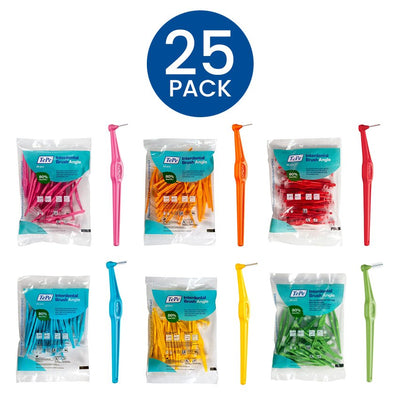
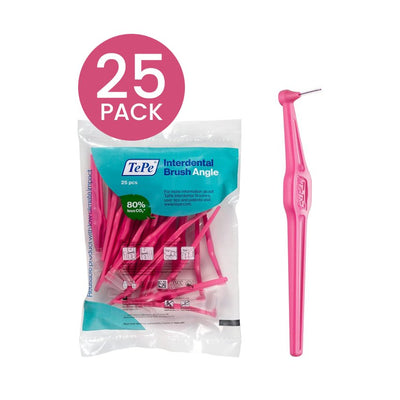
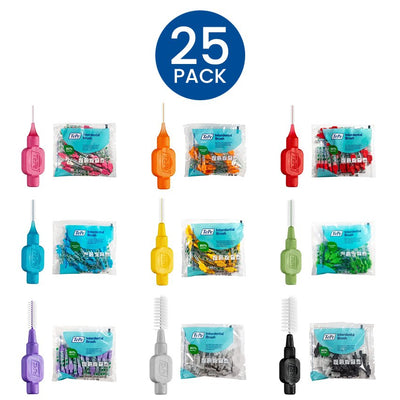
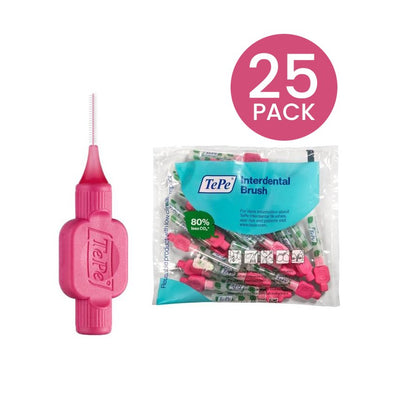
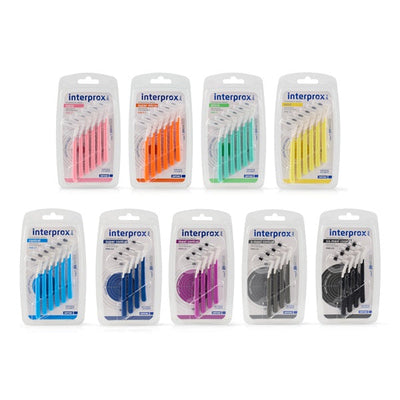
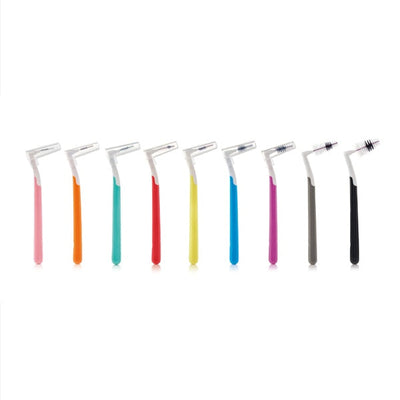
A small brush designed to fill the space between teeth and clean the entire gap.
How do you use an interdental brush correctly?
- Choose the right size so the brush fits snugly between your teeth without forcing.
- Insert gently between the teeth, angled slightly towards the gum line.
- Move the brush back and forth a few times to remove plaque and debris.
- Use a different size if needed (many people need more than one).
- Rinse the brush after use and replace when the bristles look worn.
What are the key benefits of interdental brushes?
Interdental brushes are ideal for medium‑to‑large gaps and effectively clean the concave/convex surfaces of the tooth root, especially where the gum has slightly receded. Their handles make them easy to grip, control and insert, particularly for people with limited dexterity, such as the elderly or those with arthritis.
What are the challenges of using interdental brushes?
Interdental brushes may not suit people with crowded teeth or very tight gaps. Using the wrong size can also cause issues - a brush that’s too small won’t clean effectively, while one that’s too large can feel uncomfortable or even irritate the gums.
What is dental floss?
Dental floss is a thin filament, usually nylon or PTFE, designed to scrape and clean the sides of teeth and the gums.
How do you use dental floss correctly?
- Take about 45 cm of floss and wrap most of it around your middle fingers.
- Guide the floss gently between your teeth using your thumbs and index fingers.
- Curve the floss into a C‑shape around the side of each tooth and slide it up and down.
- Repeat for every tooth, using a clean section of floss each time.
- Dispose of the used floss, don’t reuse!
What are the key benefits of dental floss?
Dental floss works best for very tight gaps between teeth and people with consistently close-set teeth. It’s easy to carry and use anywhere, making it a simple option for on‑the‑go cleaning.
What are the challenges of using dental floss?
The C‑shape wrapping method is notoriously difficult and requires excellent technique to be effective; many people can’t do it well and often skip areas without realising.
Which is best for braces & orthodontics, interdental brushes or dental floss?
Interdental brushes are essential for cleaning around braces, bridges, and implants. They also work best for wider spaces and for cleaning the back teeth, while dental floss (or floss picks) is ideal for tighter spaces and cleaning close to the gum line where interdental brushes struggle to reach. For most adults, a combination of both provides the most effective clean and helps support long‑term oral health.